Saturday, October 31, 2009

Great Expectations: November in the Piedmont

Birds.− By November, the fall migration has usually ended. The wood thrushes have disappeared, replaced by the melodic hermit thrush until springtime. November also marks the return of juncos and a number of sparrows, including tree, fox, white-throated and white-crowned sparrows. You can also expect to see more duck species, especially common goldeneyes and hooded mergansers. If you are very lucky, you might catch a glipse of short-earred or northern saw whet owls, which are sometimes spied in the Triangle during the winter months.

Woodpeckers make their home in the Piedmont year-round, with one exception, the yellow-bellied sapsucker (Sphyrapicus varius). These active birds can be recognized by their black and white back and wings, red forehead and yellow breast; males also have a red throat. Found throughout the eastern United States, this woodpecker in well-known for drilling a series of small wells in trees, from which it laps up sap and feeds on the cambium of the tree. These wells also attract insects and are used by other birds species.

Butterflies.− Butterfly watchers can expect a decline in butterfly sightings this month, but you might still see some of the sulphurs and whites (family: Pieridae).

Remember: The Carolinas are home to five families of butterflies: the skippers (Hesperiidae), gossamer wings (Lycaenidae), brush-foots (Nymphalidae), swallowtails (Papilionidae) and the sulphurs and whites (Pieridae). Each of these families can be divided into a number of sub-families, each having distinct identifying characteristics.

This month, we will consider a sub-family of the brush-foots, the milkweed butterflies (Danainae). Members of the Danainae are boldly colored with black and orange wings. Males have distinct black spots or patches called andoconium on each hindwing that release pheromones. Caterpillars are finely striped with black, white and yellow. Three species of milkweed butterflies are found in North Carolina: monarch, queen and soldier. Queen and soldier sightings are mainly limited to the coast, although queens have been recorded in Durham County. The food plants for the caterpillars are strictly those in milkweed family, including the genera Asclepias (e.g., butterfly weed, common milkweed), Matelea (e.g., common anglepod, maroon Carolina milkvine) and Cynanchum (e.g., sand-vine on the coast). Plants in this family are poisonous, making the caterpillars and adults mildly toxic and extremely distasteful to potential predators. Adult Danaids take nectar from a variety of flowers.

Reptiles & Amphibians.− Expect to find a few copperheads warming themselves on the roads at night this month. Also, look out for redbacked salamanders and box turtles.

Other Insects.− This month, the crickets and cicadas will quiet down for the winter, and the orb weavers will certainly disappear. Watch out for wasps and yellow jackets while hiking and exploring this month.

In Bloom this Month.− Be on the lookout for these November fruits and flowers:

In Bloom:
BEARDED BEGGARSTICKS - Bidens aristosa
BLUE MISTFLOWER - Conoclinium coelestinum
WHITE WOOD-ASTER – Eurybia divaricata
WITCH HAZEL - Hamamelis virginiana
SCARLET ROSE-MALLOW – Hibiscus coccineus
BLACK-EYED SUSAN – Rudbeckia fulgida
GOLDENROD(S) – Solidago spp.
FROST ASTER(S) - Symphyotrichum spp.

In Fruit:
PERSIMMON – Diospyros virginiana
BEAUTY BERRY – Callicarpa americana
HEARTS-A-BUSTIN’ – Euonymus americanus
AMERICAN HOLLY - Ilex opaca
CORAL HONEYSUCKLE - Lonicera sempervirens
PASSION FLOWER – Passiflora spp.
FOX GRAPES – Vitis labrusca (thanks Katie Rose!)
MUSCADINES – Vitis rotundifolia

Historical Anecdote: Sassafras – Sassafras albidum
“Yellow or orange, or blood-orange, or sometimes softest salmon pink, or blotched with bright vermillion, the leaves of the Sassafras prove than not all autumnal splendor is confined to the northern forests. Deep into the South, along the snake-rail fences, beside the soft wood roads, in old fields where the rusty brook sedge is giving way to the return of forest, the Sassafras carries its splendid banners to vie with the scarlet Black Gum and the yellow Sweet Gum and the other trees of which the New Englander may hardly have heard. The deep blue fruits on thick bright red stalks complete a color effect in fall which few trees anywhere surpass.” – Donald Culross Peattie, 1948, A Natural History of Trees of Eastern and Central North America

Wildlife Profile.− This month’s wildlife profile is the NORTHERN REDBACK SALAMANDER (Plethodon cinereus). The northern redback salamander, often found wandering across warm Piedmont roads in November, comes in two distinct color morphs: gray with tiny white spots and well-defined red stripe on its back (called “redback”), and all gray-back with tiny spots (called “leadback”). This tiny salamander is usually between two and four inches long and occurs throughout the woods of the Piedmont.

Unlike more conspicuous salamanders (e.g., spotted salamanders, marbled salamanders), the northern redback salamander is terrestrial, completing its entire life cycle away from water. In North Carolina, northern redback salamanders will mate between October and April. In early summer, females will lay 8-10 eggs within the cavities of decaying logs; the female will guard these eggs until they hatch in late summer. These salamanders are ravenous predators, consuming termites, ants, flies, springtails, spiders, snails, slugs and a number of other arthropods.

Did you know?
- Northern redback salamanders will sometime eat the eggs of their own species.
- Redback salamanders can be found under rocks, logs and decaying leaves in the Piedmont.
- North Carolina is also home to the southern redback salamander (Cinereus serratus), but this species is only found in the mountains south of the French Broad river.

References:
Cook, Dave. 2001. The Piedmont Almanac. Chapel Hill, North Carolina: Mystic Crow Publishing.

Daniels, J.C. 2003. Butterflies of the Carolinas – Field Guide. Adventure Publications, Inc., Cambridge, MN.

LEGRAND, H.E., Jr., and T.E. Howard, Jr. 2009. Notes on the Butterflies of North Carolina. Sixteenth Approximation. 197 pp. [Online] Available: http://149.168.1.196/nbnc/14th/IntroTOC.pdf

Martof, B.S., W.M. Palmer, J.R. Bailey, J.R. Harrison Jr. III. 1980. Amphibians and Reptiles of the Carolinas and Virginia. Chapel Hill: University of North Carolina Press.

Website: Amphibians and Reptiles of North Carolina. “Redback Salamander” http://www.bio.davidson.edu/projects/herpcons/herps_of_NC/salamanders/plecin.html

Website: Cornell Ornithology Lab. "Yellow Bellied Sapsucker" http://www.allaboutbirds.org/guide/Yellow-bellied_Sapsucker/id

Sunday, October 4, 2009

Eno River State Park (Few's Ford Access): Birding Trail

Overview: Eno River State Park hosts a number of easy to moderate trails, and a few more difficult ones, for the weekend hiker. If you're looking for an easy hike through a variety of habitats, try the "Birding Trail" (see map below). This trail starts at the Few's Ford parking loop and can easily by completed in 40 minutes. To begin, find the gravel maintenance road at the beginning of the parking lot loop (again, see map below). Continue down the gravel maintenance road until you find an opening in the woods. Continue through the woods, until reaching a clearing for electrical lines. At this clearing, notice a variety of ephemeral wetland pools (often hopping with frogs). Continue to the river and walk along the river until reaching a more heavily traveled trail. This trail will take you back up to the parking area.

Directions: The park is divided into five access points. The "Birding Trail" is found at the Few's Ford access, located just at the northern end of Cole Mill Road (maps & directions here).

Observations & Ponderings: On October 4, 2009, we enjoyed a lackadaisical hike along the birding trail. At the beginning of the hike, walking along a gravel road past full red cedars, we were greeted by the calls of northern mockingbirds, American crows, bluejays and northern cardinals. Before entering the dense canopy of the woods, a yellow shafted flicker zoomed by us.

The forest path offered an additional sign of wildlife: fox scat peppered with persimmon and hair. Soon a wood nymph fluttered by. We walked past some tall pines where we had seen yellow bellied sapsuckers flitting around busily in years past. Soon we came across a large mushroom and striped wintergreen (Chimaphila maculata).

As we left the wooded area, and came to the wetland filled power-line cut, we saw a number of fall flowers in bloom, including thistle, gerardia, an aster and Eupatorium species.


After traversing the power-line cut, we arrived at the slow flowing and shallow Eno River. Yellow-bellied sliders sunned on logs, carp with young hovered in small territories along the river bottom and a large mouth past eased on by.

Our lazy hike not only provided us with a glimpse of the autumnal deceleration of the natural world, but also allowed us to experience it ourselves.


Thursday, October 1, 2009

GREAT EXPECTATIONS: October in the Piedmont

ON THE WILD SIDE

Birds.− October brings a number of winter residents back to the Piedmont, but also expect diminishing numbers of broadwing hawks, chimney swifts, most swallow species and ruby-throated hummingbirds. Migrant warblers continue to pass through North Carolina as they head towards the neotropics for the winter; they can often be found with vocal winter residents such as Carolina chickadees and tufted titmice.

The tufted titmouse (Baeolophus bicolor), an active and expressive songbird in the tit and chickadee family (Paridae), is a common resident of the eastern United States. This chatty bird demands attention as it darts through trees, searching for insects and caterpillars in spring and summer, and nuts and berries in winter and fall. In fact, titmice will often hoard food from bird feeders in winter and fall, usually stashing their stores within 130 feet of the source. Tufted titmice nest in the cavities left behind by woodpeckers and favor deciduous or mixed forest and suburban yards. Birdwatchers recognize the tufted titmouse by its prominent gray crest and dark eyes.

Butterflies.− Butterfly watchers can expect a decline in butterfly sightings this month, with the exception of some of the sulphurs and whites (family: Pieridae). Monarchs continue to migrate southward this month to their winter residence in Mexico.

Remember: The Carolinas are home to five families of butterflies: the skippers (Hesperiidae), gossamer wings (Lycaenidae), brush-foots (Nymphalidae), swallowtails (Papilionidae) and the sulphurs and whites (Pieridae). Each of these families can be divided into a number of sub-families, each having distinct identifying characteristics.

This month, we will consider the spread-wing skippers (subfamily: Pyrginae). Members of the Pyrginae are normally plain and dark brown or black, and some have light spots on their forewings. A number of species land with their wings open or half open. Female pyrgines take nectar from flowers, and males often obtain salts from mud-puddles and animal droppings. Caterpillars in the subfamily Pyrginae often live in shelters constructed of rolled or webbed leaves. Most pyrgines are found in the neotropics, but a number of species can be found in North Carolina, including Hayhurst’s scallopwing, dreamy duskywings (mountains only), southern cloudywings, mottled cloudywings and northern cloudywings. Larval hosts include birches, bush clovers, lamb’s quarters, milk vetch, New Jersey tea, poplars and willows.

Reptiles & Amphibians.− Continue to keep an eye out for snakes and turtles. Although you may still hear frogs and toads calling this month, large choruses won’t start up again until January.

Other Insects.− This month, the work of twig girdlers (Oncideres cingulata) becomes evident in the form of neatly broken twig ends littering the forest floor. In late summer, female twig girdlers – large, dusky beetles – lay their eggs at the tip of a branch, and girdle the twig so that eventually it falls off, allowing her offspring to overwinter in and eventually feed on the twig and surrounding debris. Also, expect a decline in spider sightings, but keep an eye open for garden spider and praying mantis egg cases. Also, dragonfly numbers are declining this month, although you may see some species migrating to winter territories.


In Bloom this Month.−
Be on the lookout for some striking October flowers:

In Bloom:
WINGSTEM – Actinomeris alternifolia
BLUE MISTFLOWER - Conoclinium coelestinum
COMMON SNEEZEWEED - Helenium autumnale
SCARLET ROSE-MALLOW – Hibiscus coccineus
BLACK-EYED SUSAN – Rudbeckia sp.
GREAT LOBELIA – Lobelia siphilitica
DOWNY LOBELIA – Lobelia puberula
ROSINWEED(S) – Siphium spp.
GOLDENROD(S) – Solidago spp.
IRONWEED(S) - Vernonia spp

In Fruit:
HEARTS-A-BUSTIN’ – Euonymus americanus
MUSCADINES – Vitis rotundifolia

Historical Anecdote: American Beech – Fagus grandifolia
“[The] Beech is identifiable by the gleam of its wondrously smooth bark, not furrowed even by extreme old age. Here it will be free of branches for full half its height, the sturdy boughs then gracefully down-sweeping. The gray bole has a further beauty in the way it flutes out at the base into strong feet, to the shallow, wide-spreading roots. And the luxuriant growth of mosses on the north side of such a tree, together with the mottling of lichens, add to the look it ears of wisdom and serenity.” – Donald Culross Peattie, 1948, A Natural History of Trees of Eastern and Central North America

Wildlife Profile.− This month’s wildlife profile is the LADY BUG (Family: Coccinellidae), in honor of the many lady bugs that you might find in your home at the end of the month, trying to survive the winter. Ladybugs are tiny, domed insects (ranging from 1 mm to 10 mm long) with bright red or orange wingcovers and black wingspots, legs and antennae. Some species are entirely black or brown.

Over 450 species of lady bugs, also known as Coccinellids, are found in the United States. Most of these beneficial insects are predators that feed on common garden pests, such as scale insects and aphids, and they are often used as part of integrated pest control programs. Many Coccinellids have developed curious mechanisms for warding off predators, including bright red coloring (indicating to predators that they taste bad) and “reflex bleeding.” Reflex bleeding occurs when ladybugs are handled and results in the excretion of a toxin through the joints of their legs.

Did you know?
• The number of spots on the back of a lady bug sadly does NOT indicate its age.
• Some lady bugs are herbivorous and introduced species can become major pests.
• Many ladybug species overwinter as adults, but some, especially species in California, are known to migrate!
• Ladybugs beat their wings an average of 70 to 90 times per second.
• A female ladybug will lay more than 1000 eggs in her lifetime.

Monday, September 7, 2009

Triangle Naturalist: National Geographic NewsWatch

Please check out conservationist Stuart Pimm's article on the National Geographic News Watch website, where he interviews me (the Triangle Naturalist) and my husband, veterinarian Mark Cagle, about our pet boa constrictor.

Link: http://blogs.nationalgeographic.com/blogs/admin/mt-search.cgi?tag=Stuart%20Pimm&blog_id=59

You can also watch the interview, below:

Tuesday, September 1, 2009

GREAT EXPECTATIONS: September in the Piedmont

ON THE WILD SIDE

Birds.− September brings a number of winter residents back to the Piedmont, including the yellow-bellied sapsuckers, an occasional red-breasted nuthatch and a number of wrens (winter, sedge, marsh) and sparrows (swamp and white-throated). Migrant warblers continue to pass through North Carolina as they head towards the neotropics for the winter. Birders may even see snowy egrets, little blue herons and tricolored herons, which won’t return again to the Piedmont until early April.

The ruby-crowned kinglet (Regulus calendula), a diminutive songbird first described by Linnaeus in 1766, returns to the Piedmont this month after spending the summer in their breeding habitat, the coniferous forests of Canada and the northern United States. These tiny olive-grey birds, with thin dark bills, are named for the bright red spot on the top of the head of males of this species. They can also be identified by their chirp-like “di-dit” call and their constant wing-flicking. They usually forage for small insects and spiders in trees, but will sometimes take berries and tree sap.

Butterflies.− Expect to see a pulse of cloudless sulphurs, little yellows and sleepy oranges this month. Swallowtail sightings will likely drop-off by mid-month, with the exception of the black swallowtail. Butterfly watchers can also expect to see gray and red-banded hairstreaks, gulf and variegated fritillaries, as well as an increased number of viceroy sightings. Monarchs may be seen as they migrate southward to their winter residence in Mexico.

The Carolinas are home to five families of butterflies: the skippers (Hesperiidae), gossamer wings (Lycaenidae), brush-foots (Nymphalidae), swallowtails (Papilionidae) and the sulphurs and whites (Pieridae). Each of these families can be divided into a number of sub-families, each having distinct identifying characteristics. This month, we will consider the sulphurs (subfamily: Coliadinae), some species of which are on the rise this month. Members of the Coliadinae are normally some shade of yellow, often having dark markings on their wings. Males and females usually differ in appearance (i.e., they are sexually dimorphic), and their coloration may vary with the seasons. For example, the sleepy orange if often bright yellow in the summer, but their hindwings often become rust-colored in the fall. Male sulphurs can often be found congregating around mud-puddles, where they obtain water and salts. Sulphurs are found in open, disturbed habitat and they over-winter as larvae.

Reptiles & Amphibians.− Continue to keep an eye out for snakes and turtles, especially baby box turtles. Skinks are also out in abundance. Although you may still hear frogs and toads calling this month, large choruses won’t start up again until January.

Other Insects.− This month, expect an increase in praying mantis and spider activity. Female garden spiders (Argiope aurantia) will be guarding egg cases this time of year. In fact, garden spiders breed only once a year. Males garden spiders will court the females by plucking strands on her web, and die after mating, sometimes being consumed by the female. The female garden spider will then lay her eggs (usually at night), covering them in layers of silk. One to four egg sacs, with thousands of eggs inside, are usually suspended in the middle of her web, where she guards them against predation until she dies with the first hard frost. In spring, young garden spiders will emerge from the brown-silk sac. Some offspring may remain closeby, but others exude a strand of silk that gets caught in the wind, carrying them to a new home.

In Bloom this Month.− Be on the lookout for some striking September flowers:

In Bloom:
WINGSTEM – Actinomeris alternifolia
WHITE SNAKEROOT – Ageratina altissima
PARTRIDGE PEA – Chamaechrista fasciculata
TURTLEHEAD – Chelone glabra
BEECHDROPS – Epifagus virginiana
DEVIL'S-GRANDMOTHER - Elephantopus tomentosus
BONESET – Eupatorium perfoliatum
BLACK-EYED SUSAN – Rudbeckia sp.
TRAILING WILD BEAN - Strophostyles helvula
GREAT LOBELIA – Lobelia siphilitica
DOWNY LOBELIA – Lobelia puberula
SMALL SKULLCAP – Scutellaria parvula
AXILLARY GOLDENROD – Solidago caesia
GOLDENROD(S) – Solidago spp.

In Fruit:
HEARTS-A-BUSTIN’ – Euonymus americanus
MUSCADINES – Vitis rotundifolia

Historical Anecdote: Sweet gum – Liquidambar styraciflua
“This sweet gum is a noble tree, that might well impress anyone new to the sight of it. And the sight is a common one, for it grows along any fence row, in piedmont Virginia, beside any country road of the Carolinas, in any field abandoned by agriculture and growing up to scrub pine and dogwood. It comes up in company, in these upland sites, with sassafras and red cedar, and may be known by its beautiful star-shaped leaves. Their upper surface has a star-like glister, but unlike most shining leaves, those of the sweet gum are not dark at maturity but a light, gay yellow-green. Crushed in the fingers, they give out a cleanly fragrance; on the tongue they have a tart taste. Foliage so odd and yet so attractive would make any tree conspicuous.” – Donald Culross Peattie, 1948, A Natural History of Trees of Eastern and Central North America

Wildlife Profile.− This month’s wildlife profile is the CAROLINA MANTIS (Stagmomantis carolina), the only praying mantis native to North Carolina. North Carolina is also home to the Chinese mantis (Tenodera sinensis), which was introduced as pest control in the 1890s. The Carolina mantis is distinguished from the Chinese mantis by its small size, reaching only 6 cm in length. Additionally, Carolina mantids are pale green to brownish gray, and their wings do not extend past their abdomen. Whereas, the Chinese mantis can reach up to 8.5 cm and their wings are tan with green front margins. The European mantis, introduced to the northeastern United States from southern Europe in 1899), also occurs in Durham County, but is much more rare. The European mantis is small, like the Carolina mantis, but its wings extend beyond its abdomen.

Both Carolina mantids, as well as Chinese and European mantids, can be observed mating in September. After mating, the female Carolina mantis often devours her mate. She will lay 30 to 80 eggs, coated with a frothy tan water-repellant material that hardens, onto a plant stem. Carolina mantids show a marked preference for goldenrod. In spring, nymphs, looking like tiny mantids, will appear and begin hunting. Carolina mantids prey voraciously upon butterflies, moths, wasps, bees and other insects.

Carolina mantids are found from Virginia, south to Florida, westward to California.

Did you know?
• Carolina mantids overwinter as eggs.
• Female Carolina mantids eat their mate approximately 25% of the time.
• Carolina mantis egg cases are oval and flat along the twig against which they are laid; Chinese mantis egg cases are round; European mantis eggs cases are round but flattened on one side.
• Female mantids often return to the place of their birth to lay eggs.
• Carolina mantids are beneficial insects, preying on agricultural pests.

References:
National Audobon Society. 1980. Field Guide to North American Insects and Spiders. New York, New York: Chanticleer Press.
Cook, Dave. 2001. The Piedmont Almanac. Chapel Hill, North Carolina: Mystic Crow Publishing.

Saturday, August 15, 2009

GREAT EXPECTATIONS: August in the Piedmont

Birds.− In August, migrants such as chestnut-sided warblers, magnolia warblers and blackburnian warblers begin to pass through North Carolina as they head towards the neotropics for the winter. These warblers will be duller colored than they were in the spring, having lost their vibrant breeding plumage and molted into drabber winter attire.

This month, we will consider the topic of “mobbing.” Mobbing is an anti-predator strategy used most commonly by birds, but also by mammals. This behavior usually involves a group of birds (e.g., crows) dive-bombing, squawking at, defecating on or simply flying about a predator (e.g., hawk). Mobs are often assembled when birds use a specialized “mobbing call.” This mobbing call attracts conspecifics (i.e., birds of the same species) and may also serve to further disorient a potential predator. Mobbing is a strategy particularly preferred by gulls, terns and crows. These birds tend to mob a predator when it is close to the nest, and they may use different calls and mobbing responses for different predator species. In North Carolina, mobbing behavior has been observed in gulls, crows, mockingbirds, eastern kingbirds and barn swallows.

Butterflies.− Expect to see a continued rise in swallowtail sightings after the mid-summer lull, as well as a pulse in the migrant cloudless sulphurs and little yellows. Also, be on the lookout for the 2nd and 3rd broods of the tawny and hackberry emperors, respectively.

Reptiles & Amphibians.− Keep an eye out for snakes and turtles, especially baby box turtles, which begin to hatch this month. Fence lizards and skinks are also out in abundance. Listen for large choruses of green tree frogs and bullfrogs, as well as occasional calls from eastern narrow-mouthed toads and eastern spadefoots.

Other Insects.− Expect a pulse in grasshopper and cicadas activity this month. You may also see green lacewings flying around in the evenings. Lacewings are fascinating insects that are important predators in many agricultural systems. They consume aphids and other soft-bodied insects. Predators of lacewings include bats and spiders. Interestingly, lacewings are sensitive to the frequencies emitted by bats when hunting and will try to evade them. Lacewings also will not struggle in a spider web, but attempt to free themselves by chewing the strands of the web.

In Bloom this Month.− Be on the lookout for some striking August flowers:

In Bloom:
SMALL-FRUIT AGRIMONY – Agrimonia microcarpa
AMERICAN BEAUTY-BERRY -Callicarpa americana
TRUMPET-CREEPER – Campsis radicans
TICK-TREFOIL – Desmodium nudiflorum
DEVIL'S-GRANDMOTHER - Elephantopus tomentosus
JOE-PYE-WEED – Eutrochium (syn.Eupatorium) dubium
SNEEZEWEED – Helenium autumnale
SCARLET ROSE-MALLOW – Hibiscus coccineus
ST. ANDREW’S CROSS - Hypericum hypericoides
CARDINAL-FLOWER – Lobelia cardinalis
GREAT BLUE LOBELIA – Lobelia siphilitica
CORAL HONEYSUCKLE(S) - Lonicera sempervirens
BLACK-EYED-SUSAN - Rudbeckia fulgida
GREEN-HEAD CONEFLOWER – Rudbeckia laciniata
ROSINWEED – Silphium sp.
AXILLARY GOLDENROD - Solidago caesia
ANISE-SCENTED GOLDENROD – Solidago odorata
IRONWEED – Vernonia sp.

Sunday, August 9, 2009

REVISITED: Historic Occoneechee Speedway Trail (Hillsborough, NC)

Overview: The Historic Occoneechee Speedway Trail (HOST), a 44-acre preserve and historical site, includes three miles of trails that take visitors around the original speedway (open from 1948-68), or alternately, along the banks of the Eno River. This trail is set to join the statewide Mountains to the Sea Trail.
Directions: Travel south on I-85. Take exit 165 and turn right onto NC 86. Continue straight through the first stop light (intersection of NC 86 and US 70) for 0.5 miles. The entrance to the park will be on the right hand side, across from the Vietri glass store.
August 2009 Observations:

Bark of cherry-bark oak (Quercus pagodifolia)

Leaves of cherry-bark oak (Quercus pagodifolia)

Mating large milkweed bugs (Oncopeltus fasciatus) on common milkweed (Asclepias syriaca) seedpod.
Mating large milkweed bugs (Oncopeltus fasciatus) on common milkweed (Asclepias syriaca)


Unidentified caterpillars on a walnut tree (Juglans nigra)


Hackberry emperor (Asterocampa celtis)

Thursday, July 23, 2009

GREAT EXPECTATIONS: July in the Piedmont

Birds.− This month, the sonorous singing of many bird species tapers down with the heat of July, but the indefatigable indigo buntings and blue grosbeaks will continue to enliven us with their songs. Towards the end of July, crows, blackbirds and robins will begin to aggregate into their winter flocks.

Lucky birdwatchers may catch a glimpse of rare common mergansers, tricolor herons, little blue herons and snowy egrets during the next few months. Also, sandpipers are beginning to return to the Piedmont.

At the end of July, careful observers may notice an increase in strange behavior by birds: perhaps you will see a bird carefully arranged on top of an ant hill or vigorously rubbing its feathers with an ant. This behavior is called anting. No one is quite certain why birds ant, but theories abound. Perhaps the formic acid in ants reduces parasite loads or fungus. Maybe birds ant to remove the formic acid sacs from ants before eating them, although this theory fails to account for passive anting. Anting may even ease the discomfort of moulting. In North Carolina, significant anting activity occurs from mid-May until the first week of October. Summer and year-round residents that are known to engage in anting include the yellow-billed cuckoo, mourning dove, common flicker, brown thrasher and pine warbler.

Remember: Give those fledglings a fighting chance by KEEPING CATS INDOORS.

Butterflies.− According to Harry LeGrand, Jr., of the North Carolina Natural Heritage Program and NC Department of Environment and Natural Resources, “the annual doldrums of butterfly activity -- at least for grass skippers -- has started in the Piedmont.” LeGrand continues to say that “it is now possible to spend a day in the field…and see no skippers other than a few spread-wings and maybe a Fiery or Sachem.” LeGrand advises avid butterfly watchers to hold on, as these doldrums should end during the last week or two of July.

Grass skippers, members of the sub-family Hesperiinae, are found throughout North Carolina and are represented by the tawny edged skipper, crossline skipper and the southern broken-dash, among a number of others, in Durham County. The adults of most temperate species are orange-hued and are avid visitors of flowers. Caterpillars feed on grasses and often over-winter hidden within tiny leaf nests.

Reptiles & Amphibians.− Keep an eye out for snakes and turtles this month, their eggs are still incubating, but some early-birds may hatch towards the end of the month. Fence lizards and skinks are also out in abundance. Large choruses of Cope’s gray treefrogs, green tree frogs, bullfrogs and green frogs can still be heard this month. Also listen for eastern narrow-mouthed toads and eastern spadefoots. Cope’s gray treefrog froglets will continue to emerge from ponds and wetlands this month.

Other Insects.− Cicadas and katydids will be chorusing in earnest this month. Cicadas mate at the peak of summer. Males make their distinctive sound by vibrating membranes in their abdominal cavity. After mating, females lay several hundred eggs at the tips of tree branches. Once the eggs hatch, cicada nymphs fall to the ground and burrow into the soil. Staying underground for two or more years, depending on the species, cicada nymphs feed on the juice of plant roots. Eventually these nymphs emerge as adults, abandoning the hollow shells of their nymph-hood. Also be on the lookout for increased numbers of Japanese beetles, a pest that arrived from Japan in 1916 and damages more than 200 plant species in North America.

In Bloom this Month.− Be on the lookout for some striking July flowers:

In Bloom:
SMALL-FRUIT AGRIMONY – Agrimonia microcarpa
SWAMP MILKWEED – Asclepias incarnata
DOWNY YELLOW FALSE-FOXGLOVE – Aureolaria virginica
AMERICAN BEAUTY-BERRY – Callicarpa americana
GREEN-AND-GOLD – Chrysogonum virginanum
WHORLED TICKSEED – Coreopsis verticillata
TICK TREFOIL(S) – Desmodium spp.
INDIAN-STRAWBERRY – Duchesnia indica
PURPLE-CONEFLOWER – Echinacea spp.
EASTERN DAISY FLEABANE- Erigeron annuus
NORTHERN RATTLESNAKE-MASTER – Eryngium yuccifolium
THOROUGHWORT – Eupatorium spp.
WHITE AVENS – Geum canadense
SCARLET ROSE-MALLOW – Hibiscus coccineus
ST. ANDREW’S-CROSS – Hypericum hypericoides
VIRGINIA BUNCHFLOWER –Melanthium virginicum
SUMMER PHLOX – Phlox paniculata
AMERICAN LOPSEED – Phryma leptostachya
BLACK-EYED-SUSAN(S) – Rudbeckia spp.
HOARY SKULLCAP – Scutellaria incana
STICKY ROSINWEED – Silphium glutinosum
STARRY ROSINWEED –Silphium asteriscus
AXILLARY GOLDENROD – Solidago caesia.
STOKES’-ASTER – Stokesia laevis
IRONWEED – Vernonia spp.

Thursday, June 18, 2009

Sunday, June 7, 2009

GREAT EXPECTIONS: June in the Piedmont

Birds.− This month, fledging season continues. The second batch of young of the year bluebirds may be fledging in June. Ruby-throated hummingbirds, prothonotary warblers, house wrens, tufted titmice and bald eagles have also been documented to fledge in the Piedmont in June.

By now, a number of sparrow species (e.g., savannah, Lincoln’s, swamp, white-throated and white-crowned) have left North Carolina, only to reappear in September. But lucky bird watchers may be able to spot rare little blue herons and Caspian terns this month.

Between April and July, as the rays of the summer sun begin to beat down on the Piedmont, birds begin the strange habit of sunbathing or sunning. Cardinals, finches, robins and other year-round and summer residents will sit on a perch or the ground with feathers ruffled and bills agape, enjoying the warm rays of the sun. Herons and cuckoos will sit with wings outstretched. Theories abound as to why birds sunbathe. Perhaps sunning reduces parasite loads (e.g., mites, ticks and lice) or maybe it maintains the condition of birds’ feathers and skin. Sunning is most often seen on humid days after a rain, and since humidity often triggers the uncomfortable process of molting, perhaps sunbathing simply feels good.

Remember: Give those fledglings a fighting chance by KEEPING CATS INDOORS.

Butterflies.−
June does not yield too many changes in the butterfly world. This month, abundances of coral and banded hairstreaks, along with great spangled fritillaries, peak. At the end of the June, expect to find little yellows, gulf fritillaries and more common wood nymphs.

Fritillaries, members of the family Nymphalidae, are found throughout North Carolina and are represented by seven species in the state, and only three in Durham County (i.e., gulf, great-spangled and variegated). These medium to large-sized butterflies are distinguished by their brownish-orange wings adorned with black spots and wavy lines. Fritillary caterpillars come in a variety of colors, but usually have six rows of branching spines on their backs. Despite their defensive spines, caterpillars are preyed upon by birds, spiders and other insects. In Durham, the variegated fritillary (Euptoieta claudia) is most commonly seen. Caterpillars feed on violets, maypops and other Passiflora species, and adults feed on the nectar on a wide variety of species. North Carolina hosts 3 to 4 broods each year. Like the great-spangled and variegated fritillary, it prefers open habitat, such as fields, garden and forest edges.

Reptiles & Amphibians.− In June, many reptiles will be laying eggs, including box turtles, yellowbellied sliders and a number of snake species. Fence lizard and skinks are also out in abundance. Large choruses of northern cricket frogs, Fowler’s toads, eastern narrow-mouthed toads and Cope’s gray treefrogs can still be heard along with bullfrogs and green frogs.

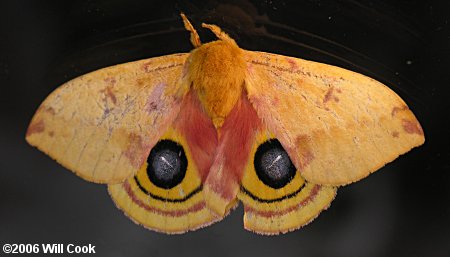
Other Insects.− Damselflies, which look like dragonflies that close their wings when they land, are out in abundance. Look for the ebony jewelwing -- males have deep black wings and iridescent green bodies, females have tell-tale while spots at the tip of their wings, as well as the American rubyspot – a clear-winged species, painted red near the base with an army-green body. Io moths, with their characteristic eye-spots on the hind wings, can sometimes be seen at the end of the month as well.

In Bloom this Month.− Be on the lookout for some of these great June flowers:

In Bloom:
TALL THIMBLEWEED - Anemone virginiana
MILKWEED(S) - Asclepias spp.
NEW JERSEY-TEA - Ceanothus americanus
SPOTTED WINTERGREEN –Chimaphila maculata
GREEN-AND-GOLD – Chrysogonum virginanum
TICK TREFOIL(S) – Desmodium spp.
MOCK-STRAWBERRY - Duchesnia indica
EASTERN DAISY FLEABANE - Erigeron annuus
WHITE AVENS – Geum canadense
ST. ANDREW’S-CROSS – Hypericum hypericoides
SESSILE BLAZING-STAR - Liatris spicata
MILKVINES – Matelea spp.
SOUTHERN SUNDROPS - Oenothera fruticosa
PASSIONFLOWERS – Passiflora spp.
AMERICAN LOPSEED – Phryma leptostachya
HOOKED BUTTERCUP - Ranunculus recurvatus
BLACK-EYED-SUSAN - Rudbeckia hirta
ELDERBERRY – Sambucus spp.
SKULLCAP - Scutellaria sp.
FIRE-PINK – Silene virginica
INDIAN-PINK - Spigelia marilandica
STOKE'S-ASTER - Stokesia laevis
SMOOTH SPIDERWORT - Tradescantia ohiensis

Wildlife Profile.− This month’s wildlife profile is the AMERICAN BEAVER (Castor canadensis). By the mid-1800’s, the fur trade and intensive hunting had extirpated the American beaver from much of its native range. Although they are still threatened by water pollution and habitat loss, today beaver populations are on the rise. This native species can be found throughout North America, excluding far northern Canada and the deserts of Mexico and southwestern U.S.
Beavers are known as quintessential “ecosystem engineers” by ecologists: by building dams, they create and maintain wetlands that provide habitat for aquatic insects, plant and other animals. These wetlands also mitigate flooding and reduce stream-bank erosion. Dams are built straight in slower moving water and modified with a curve in faster waters. The dams serve to protect and isolate beaver lodges, which are constructed from branches and mud and can be up to 20 feet wide. Only after dam and lodge construction is complete, will beavers dig out a den with its own underwater entrance. Dens typically have two fairly dry compartments: a lower one for drying off and a higher one for living space. One “colony” or family group of up to eight related individuals will share the lodge and den space. Beavers can also burrow into river banks and fashion dens there that have underwater entrances and tunnels.
Beavers are monogamous, although they will “remarry” if their mate dies. They mate during November and December (or January to March further north), and give birth to one litter of kits in April and May. Young beavers will stay with their parents for two years, sometimes helping care for the next litter of kits, before being driven from the lodge to create a territory of their own. Beavers are also known to communicate via tail slapping and low grunts, while marking their territory with castoreum, a musk-like substance. In the wild beavers live between 10 and 20 years. Their major predators include coyotes and man. Beavers feed primarily on tree bark, cambium and aquatic vegetation.

Did you know?

  • Beavers are the largest rodents in North America.
  • They have transparent eye membranes to protect their eyes and see underwater.
  • Newborn beavers can swim 24 hours after birth.
  • Beavers have bacteria in their cecum (between the large and small intestine) that help them digest the cellulose found in the bark and cambium of trees.
Identification: A large (33-77 lbs and 3 feet long), dark brown, thickly furred rodent with webbed hind feet and a flat scaly tail.