Birds.− This month, the sonorous singing of many bird species tapers down with the heat of July, but the indefatigable indigo buntings and blue grosbeaks will continue to enliven us with their songs. Towards the end of July, crows, blackbirds and robins will begin to aggregate into their winter flocks.
Lucky birdwatchers may catch a glimpse of rare common mergansers, tricolor herons, little blue herons and snowy egrets during the next few months. Also, sandpipers are beginning to return to the Piedmont.
At the end of July, careful observers may notice an increase in strange behavior by birds: perhaps you will see a bird carefully arranged on top of an ant hill or vigorously rubbing its feathers with an ant. This behavior is called anting. No one is quite certain why birds ant, but theories abound. Perhaps the formic acid in ants reduces parasite loads or fungus. Maybe birds ant to remove the formic acid sacs from ants before eating them, although this theory fails to account for passive anting. Anting may even ease the discomfort of moulting. In North Carolina, significant anting activity occurs from mid-May until the first week of October. Summer and year-round residents that are known to engage in anting include the yellow-billed cuckoo, mourning dove, common flicker, brown thrasher and pine warbler.
Remember: Give those fledglings a fighting chance by KEEPING CATS INDOORS.
Butterflies.− According to Harry LeGrand, Jr., of the North Carolina Natural Heritage Program and NC Department of Environment and Natural Resources, “the annual doldrums of butterfly activity -- at least for grass skippers -- has started in the Piedmont.” LeGrand continues to say that “it is now possible to spend a day in the field…and see no skippers other than a few spread-wings and maybe a Fiery or Sachem.” LeGrand advises avid butterfly watchers to hold on, as these doldrums should end during the last week or two of July.
Grass skippers, members of the sub-family Hesperiinae, are found throughout North Carolina and are represented by the tawny edged skipper, crossline skipper and the southern broken-dash, among a number of others, in Durham County. The adults of most temperate species are orange-hued and are avid visitors of flowers. Caterpillars feed on grasses and often over-winter hidden within tiny leaf nests.
Reptiles & Amphibians.− Keep an eye out for snakes and turtles this month, their eggs are still incubating, but some early-birds may hatch towards the end of the month. Fence lizards and skinks are also out in abundance. Large choruses of Cope’s gray treefrogs, green tree frogs, bullfrogs and green frogs can still be heard this month. Also listen for eastern narrow-mouthed toads and eastern spadefoots. Cope’s gray treefrog froglets will continue to emerge from ponds and wetlands this month.
Other Insects.− Cicadas and katydids will be chorusing in earnest this month. Cicadas mate at the peak of summer. Males make their distinctive sound by vibrating membranes in their abdominal cavity. After mating, females lay several hundred eggs at the tips of tree branches. Once the eggs hatch, cicada nymphs fall to the ground and burrow into the soil. Staying underground for two or more years, depending on the species, cicada nymphs feed on the juice of plant roots. Eventually these nymphs emerge as adults, abandoning the hollow shells of their nymph-hood. Also be on the lookout for increased numbers of Japanese beetles, a pest that arrived from Japan in 1916 and damages more than 200 plant species in North America.
In Bloom this Month.− Be on the lookout for some striking July flowers:
In Bloom:
SMALL-FRUIT AGRIMONY – Agrimonia microcarpa
SWAMP MILKWEED – Asclepias incarnata
DOWNY YELLOW FALSE-FOXGLOVE – Aureolaria virginica
AMERICAN BEAUTY-BERRY – Callicarpa americana
GREEN-AND-GOLD – Chrysogonum virginanum
WHORLED TICKSEED – Coreopsis verticillata
TICK TREFOIL(S) – Desmodium spp.
INDIAN-STRAWBERRY – Duchesnia indica
PURPLE-CONEFLOWER – Echinacea spp.
EASTERN DAISY FLEABANE- Erigeron annuus
NORTHERN RATTLESNAKE-MASTER – Eryngium yuccifolium
THOROUGHWORT – Eupatorium spp.
WHITE AVENS – Geum canadense
SCARLET ROSE-MALLOW – Hibiscus coccineus
ST. ANDREW’S-CROSS – Hypericum hypericoides
VIRGINIA BUNCHFLOWER –Melanthium virginicum
SUMMER PHLOX – Phlox paniculata
AMERICAN LOPSEED – Phryma leptostachya
BLACK-EYED-SUSAN(S) – Rudbeckia spp.
HOARY SKULLCAP – Scutellaria incana
STICKY ROSINWEED – Silphium glutinosum
STARRY ROSINWEED –Silphium asteriscus
AXILLARY GOLDENROD – Solidago caesia.
STOKES’-ASTER – Stokesia laevis
IRONWEED – Vernonia spp.
Thursday, July 23, 2009


Thursday, June 18, 2009
Sunday, June 7, 2009
GREAT EXPECTIONS: June in the Piedmont
Birds.− This month, fledging season continues. The second batch of young of the year bluebirds may be fledging in June. Ruby-throated hummingbirds, prothonotary warblers, house wrens, tufted titmice and bald eagles have also been documented to fledge in the Piedmont in June.
By now, a number of sparrow species (e.g., savannah, Lincoln’s, swamp, white-throated and white-crowned) have left North Carolina, only to reappear in September. But lucky bird watchers may be able to spot rare little blue herons and Caspian terns this month.
Between April and July, as the rays of the summer sun begin to beat down on the Piedmont, birds begin the strange habit of sunbathing or sunning. Cardinals, finches, robins and other year-round and summer residents will sit on a perch or the ground with feathers ruffled and bills agape, enjoying the warm rays of the sun. Herons and cuckoos will sit with wings outstretched. Theories abound as to why birds sunbathe. Perhaps sunning reduces parasite loads (e.g., mites, ticks and lice) or maybe it maintains the condition of birds’ feathers and skin. Sunning is most often seen on humid days after a rain, and since humidity often triggers the uncomfortable process of molting, perhaps sunbathing simply feels good.
Remember: Give those fledglings a fighting chance by KEEPING CATS INDOORS.
Butterflies.− June does not yield too many changes in the butterfly world. This month, abundances of coral and banded hairstreaks, along with great spangled fritillaries, peak. At the end of the June, expect to find little yellows, gulf fritillaries and more common wood nymphs.
Fritillaries, members of the family Nymphalidae, are found throughout North Carolina and are represented by seven species in the state, and only three in Durham County (i.e., gulf, great-spangled and variegated). These medium to large-sized butterflies are distinguished by their brownish-orange wings adorned with black spots and wavy lines. Fritillary caterpillars come in a variety of colors, but usually have six rows of branching spines on their backs. Despite their defensive spines, caterpillars are preyed upon by birds, spiders and other insects. In Durham, the variegated fritillary (Euptoieta claudia) is most commonly seen. Caterpillars feed on violets, maypops and other Passiflora species, and adults feed on the nectar on a wide variety of species. North Carolina hosts 3 to 4 broods each year. Like the great-spangled and variegated fritillary, it prefers open habitat, such as fields, garden and forest edges.
Reptiles & Amphibians.− In June, many reptiles will be laying eggs, including box turtles, yellowbellied sliders and a number of snake species. Fence lizard and skinks are also out in abundance. Large choruses of northern cricket frogs, Fowler’s toads, eastern narrow-mouthed toads and Cope’s gray treefrogs can still be heard along with bullfrogs and green frogs.
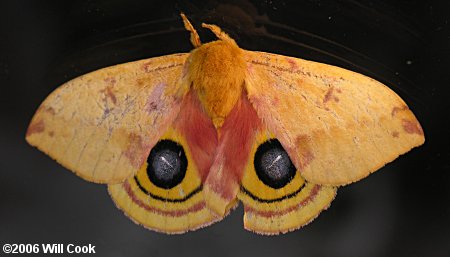
Other Insects.− Damselflies, which look like dragonflies that close their wings when they land, are out in abundance. Look for the ebony jewelwing -- males have deep black wings and iridescent green bodies, females have tell-tale while spots at the tip of their wings, as well as the American rubyspot – a clear-winged species, painted red near the base with an army-green body. Io moths, with their characteristic eye-spots on the hind wings, can sometimes be seen at the end of the month as well.
In Bloom this Month.− Be on the lookout for some of these great June flowers:
In Bloom:
TALL THIMBLEWEED - Anemone virginiana
MILKWEED(S) - Asclepias spp.
NEW JERSEY-TEA - Ceanothus americanus
SPOTTED WINTERGREEN –Chimaphila maculata
GREEN-AND-GOLD – Chrysogonum virginanum
TICK TREFOIL(S) – Desmodium spp.
MOCK-STRAWBERRY - Duchesnia indica
EASTERN DAISY FLEABANE - Erigeron annuus
WHITE AVENS – Geum canadense
ST. ANDREW’S-CROSS – Hypericum hypericoides
SESSILE BLAZING-STAR - Liatris spicata
MILKVINES – Matelea spp.
SOUTHERN SUNDROPS - Oenothera fruticosa
PASSIONFLOWERS – Passiflora spp.
AMERICAN LOPSEED – Phryma leptostachya
HOOKED BUTTERCUP - Ranunculus recurvatus
BLACK-EYED-SUSAN - Rudbeckia hirta
ELDERBERRY – Sambucus spp.
SKULLCAP - Scutellaria sp.
FIRE-PINK – Silene virginica
INDIAN-PINK - Spigelia marilandica
STOKE'S-ASTER - Stokesia laevis
SMOOTH SPIDERWORT - Tradescantia ohiensis
Wildlife Profile.− This month’s wildlife profile is the AMERICAN BEAVER (Castor canadensis). By the mid-1800’s, the fur trade and intensive hunting had extirpated the American beaver from much of its native range. Although they are still threatened by water pollution and habitat loss, today beaver populations are on the rise. This native species can be found throughout North America, excluding far northern Canada and the deserts of Mexico and southwestern U.S.
Beavers are known as quintessential “ecosystem engineers” by ecologists: by building dams, they create and maintain wetlands that provide habitat for aquatic insects, plant and other animals. These wetlands also mitigate flooding and reduce stream-bank erosion. Dams are built straight in slower moving water and modified with a curve in faster waters. The dams serve to protect and isolate beaver lodges, which are constructed from branches and mud and can be up to 20 feet wide. Only after dam and lodge construction is complete, will beavers dig out a den with its own underwater entrance. Dens typically have two fairly dry compartments: a lower one for drying off and a higher one for living space. One “colony” or family group of up to eight related individuals will share the lodge and den space. Beavers can also burrow into river banks and fashion dens there that have underwater entrances and tunnels.
Beavers are monogamous, although they will “remarry” if their mate dies. They mate during November and December (or January to March further north), and give birth to one litter of kits in April and May. Young beavers will stay with their parents for two years, sometimes helping care for the next litter of kits, before being driven from the lodge to create a territory of their own. Beavers are also known to communicate via tail slapping and low grunts, while marking their territory with castoreum, a musk-like substance. In the wild beavers live between 10 and 20 years. Their major predators include coyotes and man. Beavers feed primarily on tree bark, cambium and aquatic vegetation.
Did you know?


- Beavers are the largest rodents in North America.
- They have transparent eye membranes to protect their eyes and see underwater.
- Newborn beavers can swim 24 hours after birth.
- Beavers have bacteria in their cecum (between the large and small intestine) that help them digest the cellulose found in the bark and cambium of trees.
Saturday, May 23, 2009
Glennstone Preserve (Durham, NC)
Overview: Glennstone Nature Preserve, an 82-acre natural area in Durham, North Carolina that is protected by the Ellerbe Creek Watershed Association, offers visitors a hike through successional habitat favored by woodcocks and bottomland forests underlain by diabase soils that nurture unusual plant species.
Directions: Going northbound on I-85, take the Glenn School Road exit (#180), turn left onto. Glenn School Road. Go 0.4 miles to Glenn Road and turn right onto Glenn Road. Continue 1.3 miles to Glennstone Drive, which is the second left into the housing development. Go 1/4 mile and park near Little Valley Ct. which is across from the gazebo, storm water detention pond and the entrance to the Glennstone Nature Preserve.
.JPG)
.JPG)
Directions: Going northbound on I-85, take the Glenn School Road exit (#180), turn left onto. Glenn School Road. Go 0.4 miles to Glenn Road and turn right onto Glenn Road. Continue 1.3 miles to Glennstone Drive, which is the second left into the housing development. Go 1/4 mile and park near Little Valley Ct. which is across from the gazebo, storm water detention pond and the entrance to the Glennstone Nature Preserve.
.JPG)
Entrance to Glennstone Nature Preserve (23 May 2009, Durham, NC, © Nicolette Cagle)
Observations & Ponderings: Standing on the wooden gazebo, overlooking a cattail and woolrush filled water retention pond, visitors are greeted by the "coo-co-quereee" call of red winged blackbirds. To northern visitors, this cacophony of birdsong may be reminiscent of lakeside picnics and tall corn fields. Venturing onto the Honeysuckle Trail, however, disavows any northerner of the notion that they are back home: this trail smacks of early successional habitat found only in the southern Piedmont, brimming with loblolly pines, eastern redbuds, sweetgums and downy arrowwood viburnum.
The shrubbery is so thick, one can hardly see more than a foot in. Yet, patient observers will be rewarded. Hiking farther down the trail, the lemon yellow, four-petaled blooms of southern sundrops (Oenothera fruticosa) are revealed. This primrose was once used by early settlers as a remedy for whooping cough. It is also an invasive in Scandanavia, having reached Europe by 1614. Continuing down the Honeysuckle Trail, and then turning down the Woodcock trail, beware of fire ants. This Brazilian native creates mounds in open areas with direct sunlight and will attack interlopers with painful bites. Also, keep your eyes open for winged sumac (Rhus copallina), a striking plant that used to be smoked by the settlers of Appalachia to treat asthma.
If you are adventurous, you might find the narrow path cut into the woods and take a path that crosses a boulder filled creek. These boulders are made of diabase - a rock rich in magnesium and calcium - that weathers to create a soil that is unusually basic for the Piedmont. One of the unusual plants that this soil nurtures is anglepod or oldfield milkvine (Matelea decipiens). This plant, a vine with wide heart-shaped leaves, gets its name from its milky white sap. Its beautiful dark purple flowers are vanilla-scented and in fall, this plant will carry beautiful downy-filled seedpods, like those found on the common milkweed (Asclepias syriaca). Also, look for indian pipe (Monotropa uniflora), a white chlorophyll lacking plant that gets in nutrients from the mycorrhizal fungi associated with nearby tree roots, as well as partridgeberry, a tiny twin-flowered plant that sports one red berry in fall that was once used by American Indians to ease the pain associated with childbirth.
.JPG)
Oldfield milkvine (Matelea decipiens) at Glennstone Preserve (23 May 2009, Durham NC, © Nicolette Cagle)
The Ellerbe Creek Watershed Association offers an annual Memorial Day hike through these woods to one of the Piedmont's largest great blue heron rookeries. Great blue herons are fascinating: they are North Carolina's largest heron, sporting 6 foot wingspans. They nest in monospecific (i.e., only great blue herons) colonies of up to 500 nests. A mating pair only stays together for that breeding season, but together they will construct a nest (dad finds the sticks, mom puts the nest together), incubate three to five eggs and riase one to four young. Yellow-crowned night herons and green herons are the only other heron species known to breed in the Triangle.
If your looking for a quick, but interesting hike in Durham County, be sure to check out Glennstone Preserve. If you're interested in history, keep your eyes open for the remains of an old stone-lined spring and the ruins of an old summer cottage.
Thursday, May 14, 2009
Howell Woods (Johnson County, NC)
Overview: Howell Woods, located in Johnson County, offers over 25 miles of hiking trails through diverse North Carolina habitat types, including coastal plain bottomland hardwood forest, cypress-gum swamps and pine/scrub-oak sandhills. Visitors can enjoy the Howell Woods Environmental Learning Center or explore the preserve via canoe, horse, bike or on foot.
Directions: From Raleigh take US 70 East, exit onto I-95 South and continue to exit number 90 (US 701). Turn right onto US 701 and continue for approximately 6.3 miles before turning left onto Stricklands Crossroads (SR 1143). Continue for 3.4 miles and turn left onto Devil's Racetrack Road. Howell Woods preserve will be located about 2/10 of mile down the road on the left.
Observations & Ponderings: Howell Woods offers visitors a friendly nature center, surrounded by frog-filled ponds and numerous bird feeders. Before even heading out on the trails, one can spot bullfrogs, mockingbirds, northern cardinals, American goldfinches, downy woodpeckers, purple martins and even an elusive fox squirrel!


.JPG)
Directions: From Raleigh take US 70 East, exit onto I-95 South and continue to exit number 90 (US 701). Turn right onto US 701 and continue for approximately 6.3 miles before turning left onto Stricklands Crossroads (SR 1143). Continue for 3.4 miles and turn left onto Devil's Racetrack Road. Howell Woods preserve will be located about 2/10 of mile down the road on the left.
Observations & Ponderings: Howell Woods offers visitors a friendly nature center, surrounded by frog-filled ponds and numerous bird feeders. Before even heading out on the trails, one can spot bullfrogs, mockingbirds, northern cardinals, American goldfinches, downy woodpeckers, purple martins and even an elusive fox squirrel!

Bullfrog, 10 May 2009, Johnson County, NC (© Nicolette Cagle)

Fox squirrel, 10 May 2009, Johnson County, NC (© Nicolette Cagle)
Take a gander down Leopold Loop for a glimpse of black swallowtail butterflies, six lined racerunners, prickly pears and the delicate pink blooms of Tradescantia rosea. Listen for the sounds of field sparrows, eastern bluebirds and red tailed hawks soaring in the distance.
Tradescantia rosea, 10 May 2009, Johnson County, NC (© Nicolette Cagle)
Continue down the Bartram trail and then make your way into the swamplands of warbler way. Look for overcup and swamp chestnut oak here, along with jack-in-the-pulpit. You might also hear common grackles and pileated woodpeckers. At the end of Warbler Way, turn right down the plantation road and see if you can find a big black rat snake stretched across the gravel path!.JPG)
Black rat snake, 10 May 2009, Johnson County, NC (© Nicolette Cagle)
Make another right onto the Pine Bottom trail to find Acadian flycatchers and beautiful Atamasco lilies in bloom. From here, you can head back to the visitor center via the Bartram trail, keeping your eyes and ears open for red-eyed vireos, blue-grey gnatcatchers, tufted titmice, as well as blooming blue-eyed grass and golden ragwort and skitterish eastern five-lined skinks..JPG)
Atamasco lily, 10 May 2009, Johnson County, NC (© Nicolette Cagle)
BACKYARD NATURE: Treefrogs & More
One humid evening last week, I went out in my own backyard to commune a bit with nature. I was greeted by a vociferous chorus of grey treefrogs looking for love. I was also surprised by a Fowler's toad, hopping furiously away from me, as well as a beautiful sphinx moth. Sometimes nature truly is right outside your own backdoor.

Sphinx moth, 6 May 2009, Durham NC (© Nicolette Cagle)
.JPG)
Fowler's toad, 6 May 2009, Durham NC (© Nicolette Cagle)
.JPG)
Grey treefrog on river birch, 6 May 2009, Durham NC (© Nicolette Cagle)
.JPG)
Grey treefrog on eastern redbud, 6 May 2009, Durham NC (© Nicolette Cagle)

Tuesday, May 5, 2009
ROADTRIP: Lake Waccamaw State Park (Columbus County, NC)
Overview: Lake Waccamaw State Park is located in Columbus County, about 160 miles from the Triangle. It headlines one of North Carolina’s most unusual natural features: a pH neutral bay lake, named for the abundance of bay trees (e.g., sweet bay and red bay). No one knows for sure how these bay lakes were formed, but hypotheses abound, e.g., they were formed by meteor showers, wind or wave action or underground springs.
Enjoy nearly 9 miles hiking trails at Lake Waccamaw or try your hand at canoeing in the vast 8,936-acre lake.
Directions: Here is the directions & map provided by the North Carolina state park system. Observations & Ponderings: Standing at the edge of an immense, tea-stained bay lake in North Carolina’s coastal plain, I can only wonder at what it must have been like for its first inhabitants: Waccamaw-Souian Indians that canoed these for over 1,000 years. How tall and thick were the looming cypress trees that they saw? Did they see just one alligator or tens or even hundreds each day? Were the large, half-dollar sized land snails even more colorful then?
.jpg)
Hypnotized by the lapping waves, I can hardly pull myself away from the shore. But I do and I begin to walk. At first, each step through the shrubby bay forest elicits a dry crackle that I fear will frighten away the northern parulas I hear buzzing overhead. They don’t seem to mind. Even the vivid green Carolina anoles, hanging onto the smooth bark of a sweetbay magnolia, barely seem to pause as I walk by.

Enjoy nearly 9 miles hiking trails at Lake Waccamaw or try your hand at canoeing in the vast 8,936-acre lake.
Directions: Here is the directions & map provided by the North Carolina state park system. Observations & Ponderings: Standing at the edge of an immense, tea-stained bay lake in North Carolina’s coastal plain, I can only wonder at what it must have been like for its first inhabitants: Waccamaw-Souian Indians that canoed these for over 1,000 years. How tall and thick were the looming cypress trees that they saw? Did they see just one alligator or tens or even hundreds each day? Were the large, half-dollar sized land snails even more colorful then?
.jpg)
Lake Waccamaw SP, NC, 31 May 2005 (© Nicolette Cagle)
Hypnotized by the lapping waves, I can hardly pull myself away from the shore. But I do and I begin to walk. At first, each step through the shrubby bay forest elicits a dry crackle that I fear will frighten away the northern parulas I hear buzzing overhead. They don’t seem to mind. Even the vivid green Carolina anoles, hanging onto the smooth bark of a sweetbay magnolia, barely seem to pause as I walk by.

Carolina anole, Lake Waccamaw SP, NC, 31 May 2005 (© Nicolette Cagle)
The Lakeshore Trail winds through the desiccated forest, and finally brings me closer to the shoreline, which I end up walking along for nearly five miles. The delicate, blushing blooms of rose spiderwort (Tradescantia rosea) erupting alongside the narrow footpath can only be a harbinger of good luck. Within minutes, while I’m still lost in the sensation of the warm breeze coming off the lake, I hear rustling in the grass a couple feet ahead – I catch a glimpse of a long black tail: snake! My heart beats faster and I rush ahead, as stealthily as I can manage…yes, yes…the black racer has stopped and is staring me down with its strangely sentient black eyes. I snap as many photos as I can, afraid that this primitive animal will soon slip away...and it does.
.jpg) Northern black racer, Lake Waccamaw SP, NC, 31 May 2005 (© Nicolette Cagle)
Northern black racer, Lake Waccamaw SP, NC, 31 May 2005 (© Nicolette Cagle)
.jpg) Northern black racer, Lake Waccamaw SP, NC, 31 May 2005 (© Nicolette Cagle)
Northern black racer, Lake Waccamaw SP, NC, 31 May 2005 (© Nicolette Cagle) My senses are enlivened now, my snake vision activated. My eyes focus about eight feet ahead, traversing side to side, waiting to catch a glimpse of the next snake. Only minutes later, I spot another rubbery, black crescent ahead where some small trees are growing next to the water. “It has got to be a snake,” I think to myself, but it doesn’t move. “Huh, maybe it’s a piece of shredded tire.” No! It’s another black racer warming itself in the dappled sunlight. I frantically snap more pictures. The hike continues, my search continues. About 4 feet ahead, my eyes converge on a coppery, semi-coiled form in the dry grass. I walk slowly, hunching slightly, stopping to take a picture every couple steps. The pattern of this much maligned ophidian is bewitching: salmon pink mottled with bronze. I get closer, focusing my camera lens on the copper eye and black slit of the pupil. This copperhead is savagely beautiful. I’m mesmerized, tempted to take one step closer. I close my eyes for a second and then, reluctantly, take two steps back and continue on my way.
.jpg)
I walk deliberately, always searching, always hopeful. The hunt is addictive. The path widens and is covered with dry brown leaves. A bright sinusoidal shape sharpens into focus. Another copperhead perhaps? This snake is long though and comparatively thin-bodied. I rush ahead – a corn snake! It retracts into an exaggerated S-shape, its upper body is held above the ground revealing a perfect the checkerboard pattern of the belly. Click, click, click, I photograph the snake quickly, the images hardly look real.
.jpg)
.jpg)
Southern copperhead, Lake Waccamaw SP, NC, 31 May 2005 (© Nicolette Cagle)
I walk deliberately, always searching, always hopeful. The hunt is addictive. The path widens and is covered with dry brown leaves. A bright sinusoidal shape sharpens into focus. Another copperhead perhaps? This snake is long though and comparatively thin-bodied. I rush ahead – a corn snake! It retracts into an exaggerated S-shape, its upper body is held above the ground revealing a perfect the checkerboard pattern of the belly. Click, click, click, I photograph the snake quickly, the images hardly look real.
.jpg)
Corn snake, Lake Waccamaw SP, NC, 31 May 2005 (© Nicolette Cagle)
By the time I reach the dam and the flooded Waccamaw Creek, and then hike back to my little blue Jeep, I have seen 12 snakes of four different species (northern black racer, southern copperhead, red-bellied watersnake and corn snake). I thank the snake-hunting gods above, greedy for more snakes and wondering what my next adventure will yield.
Sunday, May 3, 2009
GREAT EXPECTATIONS: May in the Piedmont
Birds.− This month migration season continues. Most of the brilliantly colored warblers are just passing through, but some migrants stop and stay in North Carolina. Local breeders include the scarlet and summer tanagers, ovenbirds and prairie warblers.
This may be the last opportunity (at least for a couple of months) for birders to see some of the plovers (e.g., black-bellied and semi-palmated) and sandpipers (e.g., spotted, solitary, least, white-rumped and upland). Also, be on the look out for lingering snowy egrets, little blue herons and black-crowned night herons.
Many birds also fledge this month. Bluebirds, ruby-throated hummingbirds, brown thrashers, northern mockingbirds, cardinals, pileated woodpeckers and barred owls are just some of the species documented to fledge in the Piedmont in May.
Most common songbirds and woodpeckers hatch naked and helpless, relying on their parents for food until they fledge, i.e. have the ability to fly. Songbird fledglings are very curious and pick up various objects with their bills, eventually learning appropriate food choices by watching their parents. Fledgling woodpeckers may stay with their parents for several weeks, learning the ropes of insect gathering and hole drilling. Eventually, both songbird and woodpecker parents may have to resort to some tough love, via aggression (commonly seen among cardinals) or by simply ignoring their offspring (in the case of sapsuckers), to drive begging fledglings away and ensure their independence.
Remember: Give those fledglings a fighting chance by KEEPING CATS INDOORS.
Butterflies.− This May, butterfly watchers will delight in the appearance of more skippers, quick and darting butterflies in the family Hesperiidae, including the swarthy, clouded, least, fiery, tawny-edged and crossline skippers. Skippers are often challenging to identify, but careful observation and quick photography can help butterfly watchers discern the differences among species. Still, some species, like the tawny-edged and crossline skipper, are so similar in appearance that even photographs may prove difficult to differentiate.
Also, expect to see some hairstreaks (e.g., coral, banded and striped), great spangled frittilaries, northern pearly eyes, Appalachian browns, common wood nymphs and little wood satyrs.
The hackberry emperor, one of our brushfooted butterflies in the family Nymphalidae, can also be found in North Carolina’s piedmont this month. This dark-brown butterfly is locally abundant in areas with hackberry and sugarberry trees, the food plants for the horned green caterpillars. Adults do not nectar on flowers, but feed on sap, carrion and even human sweat! The adult butterflies seen this time of year over-wintered as partially grown caterpillars. As adults, males will perch, awaiting the females before mating commences. Pale green eggs are laid on hackberry plants and caterpillars will feed communally on the hackberries, sometimes becoming a serious pest, before entering their chrysalis stage. Another brood of adult butterflies will emerge between late June and late August, and in the Piedmont a third brood will emerge between late August and late September!
Reptiles & Amphibians.− This month, expect to find snakes even during the day. The hot weather of mid-summer makes must of our snakes crepuscular (i.e., active at dawn and dusk), but this time of year many snakes will be out in the middle of the day. Large choruses of northern crickets frogs, Fowler’s toads, eastern narrow-mouthed toads and Cope’s gray treefrogs can also be heard this time of year. Also expect to hear bullfrogs and the characteristic three beat banjo-like call of the green frog.
Other Insects.− The first fire-flies often appear in May. Also, be on the look-out for hummingbird moths, a species of moth that hovers and makes an audible humming noise as it feeds. At the end of the month, one might find annual cicada shells clinging to tree trunks.
Mammals.− A number of bat species, including the little brown myotis, silver-haired bat, red bat and big brown bat are courting this month. Also, expect to see some young rabbits and opossums.
In Bloom this Month.− As the spring ephemerals disappear, May floral displays may initially seem less impressive, but there are some gems among the flowers blooming this month, including the high-contrast green-and-golds and the pitcher-shaped jack-in-the-pulpits.
In Bloom:
JACK-IN-THE-PULPIT (Arisaema triphyllum)
SMOOTH SWEET-SHRUB (Calycanthus floridus var. glaucus)
GREEN-AND-GOLD (Chrysogonum virginianum)
HEART'S-A'BUSTIN' (Euonymus americanus)
LITTLE-BROWN-JUG (Hexastylis arifolia)
BEAKED HAWKWEED (Hieracium gronovii)
RATTLESNAKE-WEED (Hieracium venosum)
BLUETS (Houstonia caerulea)
SUMMER BLUET (Houstonia purpurea)
EASTERN YELLOW STAR-GRASS (Hypoxis hirsuta)
COLONIAL DWARF-DANDELION (Krigia dandelion)
WOOD-SORREL (Oxalis sp.)
RUNNING FIVE-FINGERS -(Potentilla canadensis)
BLACKBERRY (Rubus sp.)
LYRE-LEAF SAGE (Salvia lyrata)
SKULLCAP (Scutellaria sp.)
MAPLE-LEAF VIBURNUM (Viburnum acerifolium)
Wildlife Profile.− This month’s wildlife profile is the BROWN-HEADED NUTHATCH (Sitta pusilla). Brown-headed nuthatches, tiny affable songbirds with blue-gray wings, white breasts and brown caps, are found in long-leaf and loblolly pine forests in the southeastern United States, as well as the Bahamas. These energetic little birds are non-migratory (i.e., they remain in the southeast year-round) and subsist on arthropods and pine seeds.
Brown-headed nuthatches use dead pines for nesting, and usually nest in tree cavities between February and April. Brown-headed nuthatch nests are often attended by “helpers,” young males that may be older off-spring of the nesting pair. Young brown-headed nuthatches will fledge about 20 days after hatching.
Brown-headed nuthatch populations are declining throughout its range. The destruction of the pine forests of the southeast pose the biggest problem to the success of this species. Commercial logging reduces the foraging and breeding habitat of brown-headed nuthatches and it can take 12 to 25 years of forest regeneration before the habitat is again suitable for these charismatic birds. Conservation management for the red-cockaded woodpecker (e.g., maintaining long-leaf pine forests via fire at Fort Bragg in the Sandhills) may support brown-headed nuthatch populations by increasing the number of large, dead pines.
Did you know?
- Brown-headed nuthatches are one of a few bird species known to use tools: they use small pieces of wood, manipulated by their dexterous beaks, to pry up pine bark under which they can find insects for food.
- Brown-headed nuthatches move very short distances after breeding, making them more susceptible to the negative affects of habitat fragmentation.
- These birds feed by hopping along tree trunks often hanging upside down.
Identification: Small (3.9 to 4.3 in.) blue-gray bird with white breast and brown cap. Its black bill is long and thin. The call of this bird is reminiscent of a rubber-duck, but they also make soft squeaking sounds.
Monday, April 20, 2009
GREAT EXPECTATIONS: April in the Piedmont
Birds.− Avid birders may have already noticed the arrival of some early warblers, perhaps catching a glimpse of the Louisiana waterthrush’s “bubble-gum” pink legs or hearing the melodic song of the yellow-throated warbler. This month, more spring migrants are headed our way. These species may be seen during the next couple months, as they head north: some wood-warblers (including golden-winged, Nashville, chestnut-sided, magnolia, black-throated blue, black-throated green, bay-breasted and blackpoll), herons (e.g., little blue heron, black-crowned night heron, cattle-egret), thrushes (e.g., veery, grey-cheeked and Swainson’s) and sandpipers (e.g., spotted and solitary). Also be on the lookout for sora, Virginia rail or a rare glossy ibis.
Some species will be arriving this month with the intention of staying the summer and breeding here in the Piedmont; these include: whip-poor-wills, chimney swifts, ruby-throated hummingbirds, eastern wood-pewees, Acadian flycatchers, eastern kingbirds, northern parulas, prairie warblers, summer and scarlet tanagers and yellow-breasted chats.
Butterflies.− In April, butterfly watchers may begin to find some of the skippers (e.g., zabulon, dusted, pepper and salt), duskywings (mottled, zarucco), cloudywings (southern, northern, confused), satyrs (gemmed, Carolina) and pearlyeyes (southern and northern). Silvery checkerspots can be spotted in moist floodplains or sometimes near drier woodland borders, where adults glean nectar from, and caterpillars feed, on sunflowers (Helianthus) and rosinweeds (Silphium spp.). Look for red-spotted purples in hardwoods forests and forest edges; adults may be found taking sustenance from tree sap or damp ground, while caterpillars feed on cherries (Prunus spp.) and other members of the Rosaceae. Butterfly aficionados will continue to see a number of sulphurs and hairstreaks this month, as well as questionmarks and commas.
This month, the most spectacular visitors may be the monarchs, which can be found in a variety of habitats. Adult monarchs feed on the nectar of milkweeds (Asclepias spp.) and other flowers, while later in the year, monarch caterpillars will strictly feed on milkweeds. Also be on the lookout for the viceroy, a monarch mimic. Viceroys have adapted the same orange and black coloring of monarchs that warns predators of their toxicity (cardenolides are the bitter compounds in milkweeds that make monarchs toxic to vertebrates), but these mimics are normally found in wet areas near their primary foodplant: willows (Salix spp.)
Reptiles & Amphibians.− This month, you may start to hear northern cricket frogs, eastern narrow-mouthed toads and Cope’s gray treefrogs. Also, expect to continue hearing American and Fowler’s toads, spring peepers, bull frogs, green frogs, southern leopard frogs and eastern spadefoots. The large choruses of southeastern chorus frogs will begin winding down this month. Be on the lookout for basking yellow-bellied sliders and painted turtles. Snakes will be out as well, be sure not to step on the diminuitive and well-camouflaged northern brown snake (Storeria dekayi) when walking on preserve trails.
In Bloom this Month.− April is a wonderful month to test your tree identification skills. Try to identify trees by their bark or buds before they flower and leaf out!
In late March and early April, woodland hikers may notice a robust small tree or large shrub, with large hand-like leaves (i.e., palmately compound) and upright clusters of tubular yellow flowers. What is this vigorous woody plant? Most likely, you are seeing the painted buckeye (Aesculus sylvatica), a southeastern Piedmont endemic (i.e., exclusively found in the Piedmont of the southeastern United States). The moniker “buckeye” is derived from the similarity between the seed of the buckeye to a male deer’s (or buck’s) eye. These same seeds are quite toxic, and in the past they were ground up and thrown into creeks to stun fish. Some animals, including deer and squirrels, are resistant to the toxin (called aesculin, which destroys red blood cells) and can eat the seeds. The showy flowers are visited by ruby-throated hummingbirds, butterflies (e.g., eastern tiger swallowtail) and bees.
In Bloom:
BUCKEYES (Aesculus spp.)
WINDFLOWER (Anemonella thalictroides)
SWEET-SHRUB (Calycanthus floridus)
MUSCLEWOOD (Carpinus caroliniana)
FLOWERING DOGWOOD (Cornus florida)
RATTLESNAKE-WEED (Hieracium venosum)
QUAKER-LADIES (Houstonia caerulea)
EASTERN YELLOW STAR-GRASS (Hypoxis hirsuta)
DWARF CRESTED IRIS (Iris cristata)
CORAL HONEYSUCKLE (Lonicera sempervirens)
HAIRY WOODRUSH (Luzula echinata)
VIRGINIA PENNYWORT (Obolaria virginiana)
MAY-APPLE (Podophyllum peltatum)
EARLY SAXIFRAGE (Saxifraga virgininiensis)
AMERICAN BLADDERNUT (Staphylea trifolia)
GIANT CHICKWEED (Stellaria pubera)
FOAMFLOWER (Tiarella cordifolia)
CATESBY’S TRILLIUM (Trillium catesbaei)
LITTLE SWEET BETSY (Trillium cuneatum)
MAPLE-LEAF VIBURNUM (Viburnum acerifolium)
DOWNY ARROW-WOOD (Viburnum rafinesquianum)
Wildlife Profile.− This month’s wildlife profile is the BROWN SNAKE (Storeria dekayi). Brown snakes, small secretive brownish-gray ophidians, are found throughout the eastern United States. Two subspecies of the brown snake are found in North Carolina. The midland brown snake (Storeria dekayi wrightorum) can be found in western North Carolina and also occupies much of the American Midwest and Deep South, while the northern brown snake (Storeria dekayi dekayi) is found in the northeastern portion of the state and the Northeastern U.S. In most of the state, these two sub-species probably interbreed, making the sub-species especially difficult to differentiate.
This common snake, which is mostly found in spring and early summer, prefers mixed hardwoods, pine flatwoods, swamps and riparian (i.e., the edges of rivers and streams) habitat, but it is also found in vacant lots and suburban backyards. This snake is often found beneath cover, whether it be logs, rocks or discarded tin and boards. Brown snakes feed primarily upon slugs and earthworms, but will also take small salamanders, grubs and beetles. When captured, the brown snake will never bite, but they may flatten their bodies and release a harmless, but odoriferous musk.
Brown snakes mate in both fall and spring. The male brown snake will start courtship by following a pheromone trail left by the female. Then the male uses his tongue to collect chemical signals from his potential mate, seemingly making sure that she is indeed female. Males will then begin a jerky courtship display before mating commences. Female brown snakes generally give birth to between 6 and 26 live young between late July and early September in North Carolina. Although the young do not receive maternal care, they may stay close to their mother for a little while after birth. The lifespan of brown snakes in the wild is unknown, but captive individuals can live up to 7 years old.
Did you know?
• Brown snakes extract terrestrial snails from their shells before eating them.
• Its predators include frogs, toads, other snakes, birds, rodents and domestic cats and dogs.
• Brown snakes help homeowners by reducing a common garden pest: the slug.
• Brown snakes are common, but pollution and habitat loss threaten their populations.
Identification: Small (9 to 13 in.) brown snake with two rows of black spots down the back, a thin dark blotch on the neck and a dark streak behind the eye. The belly is often pale pink or brown. Young brown snakes will have a yellowish collar on the neck.
Some species will be arriving this month with the intention of staying the summer and breeding here in the Piedmont; these include: whip-poor-wills, chimney swifts, ruby-throated hummingbirds, eastern wood-pewees, Acadian flycatchers, eastern kingbirds, northern parulas, prairie warblers, summer and scarlet tanagers and yellow-breasted chats.
Butterflies.− In April, butterfly watchers may begin to find some of the skippers (e.g., zabulon, dusted, pepper and salt), duskywings (mottled, zarucco), cloudywings (southern, northern, confused), satyrs (gemmed, Carolina) and pearlyeyes (southern and northern). Silvery checkerspots can be spotted in moist floodplains or sometimes near drier woodland borders, where adults glean nectar from, and caterpillars feed, on sunflowers (Helianthus) and rosinweeds (Silphium spp.). Look for red-spotted purples in hardwoods forests and forest edges; adults may be found taking sustenance from tree sap or damp ground, while caterpillars feed on cherries (Prunus spp.) and other members of the Rosaceae. Butterfly aficionados will continue to see a number of sulphurs and hairstreaks this month, as well as questionmarks and commas.
This month, the most spectacular visitors may be the monarchs, which can be found in a variety of habitats. Adult monarchs feed on the nectar of milkweeds (Asclepias spp.) and other flowers, while later in the year, monarch caterpillars will strictly feed on milkweeds. Also be on the lookout for the viceroy, a monarch mimic. Viceroys have adapted the same orange and black coloring of monarchs that warns predators of their toxicity (cardenolides are the bitter compounds in milkweeds that make monarchs toxic to vertebrates), but these mimics are normally found in wet areas near their primary foodplant: willows (Salix spp.)
Reptiles & Amphibians.− This month, you may start to hear northern cricket frogs, eastern narrow-mouthed toads and Cope’s gray treefrogs. Also, expect to continue hearing American and Fowler’s toads, spring peepers, bull frogs, green frogs, southern leopard frogs and eastern spadefoots. The large choruses of southeastern chorus frogs will begin winding down this month. Be on the lookout for basking yellow-bellied sliders and painted turtles. Snakes will be out as well, be sure not to step on the diminuitive and well-camouflaged northern brown snake (Storeria dekayi) when walking on preserve trails.
In Bloom this Month.− April is a wonderful month to test your tree identification skills. Try to identify trees by their bark or buds before they flower and leaf out!
In late March and early April, woodland hikers may notice a robust small tree or large shrub, with large hand-like leaves (i.e., palmately compound) and upright clusters of tubular yellow flowers. What is this vigorous woody plant? Most likely, you are seeing the painted buckeye (Aesculus sylvatica), a southeastern Piedmont endemic (i.e., exclusively found in the Piedmont of the southeastern United States). The moniker “buckeye” is derived from the similarity between the seed of the buckeye to a male deer’s (or buck’s) eye. These same seeds are quite toxic, and in the past they were ground up and thrown into creeks to stun fish. Some animals, including deer and squirrels, are resistant to the toxin (called aesculin, which destroys red blood cells) and can eat the seeds. The showy flowers are visited by ruby-throated hummingbirds, butterflies (e.g., eastern tiger swallowtail) and bees.
In Bloom:
BUCKEYES (Aesculus spp.)
WINDFLOWER (Anemonella thalictroides)
SWEET-SHRUB (Calycanthus floridus)
MUSCLEWOOD (Carpinus caroliniana)
FLOWERING DOGWOOD (Cornus florida)
RATTLESNAKE-WEED (Hieracium venosum)
QUAKER-LADIES (Houstonia caerulea)
EASTERN YELLOW STAR-GRASS (Hypoxis hirsuta)
DWARF CRESTED IRIS (Iris cristata)
CORAL HONEYSUCKLE (Lonicera sempervirens)
HAIRY WOODRUSH (Luzula echinata)
VIRGINIA PENNYWORT (Obolaria virginiana)
MAY-APPLE (Podophyllum peltatum)
EARLY SAXIFRAGE (Saxifraga virgininiensis)
AMERICAN BLADDERNUT (Staphylea trifolia)
GIANT CHICKWEED (Stellaria pubera)
FOAMFLOWER (Tiarella cordifolia)
CATESBY’S TRILLIUM (Trillium catesbaei)
LITTLE SWEET BETSY (Trillium cuneatum)
MAPLE-LEAF VIBURNUM (Viburnum acerifolium)
DOWNY ARROW-WOOD (Viburnum rafinesquianum)
Wildlife Profile.− This month’s wildlife profile is the BROWN SNAKE (Storeria dekayi). Brown snakes, small secretive brownish-gray ophidians, are found throughout the eastern United States. Two subspecies of the brown snake are found in North Carolina. The midland brown snake (Storeria dekayi wrightorum) can be found in western North Carolina and also occupies much of the American Midwest and Deep South, while the northern brown snake (Storeria dekayi dekayi) is found in the northeastern portion of the state and the Northeastern U.S. In most of the state, these two sub-species probably interbreed, making the sub-species especially difficult to differentiate.
This common snake, which is mostly found in spring and early summer, prefers mixed hardwoods, pine flatwoods, swamps and riparian (i.e., the edges of rivers and streams) habitat, but it is also found in vacant lots and suburban backyards. This snake is often found beneath cover, whether it be logs, rocks or discarded tin and boards. Brown snakes feed primarily upon slugs and earthworms, but will also take small salamanders, grubs and beetles. When captured, the brown snake will never bite, but they may flatten their bodies and release a harmless, but odoriferous musk.
Brown snakes mate in both fall and spring. The male brown snake will start courtship by following a pheromone trail left by the female. Then the male uses his tongue to collect chemical signals from his potential mate, seemingly making sure that she is indeed female. Males will then begin a jerky courtship display before mating commences. Female brown snakes generally give birth to between 6 and 26 live young between late July and early September in North Carolina. Although the young do not receive maternal care, they may stay close to their mother for a little while after birth. The lifespan of brown snakes in the wild is unknown, but captive individuals can live up to 7 years old.
Did you know?
• Brown snakes extract terrestrial snails from their shells before eating them.
• Its predators include frogs, toads, other snakes, birds, rodents and domestic cats and dogs.
• Brown snakes help homeowners by reducing a common garden pest: the slug.
• Brown snakes are common, but pollution and habitat loss threaten their populations.
Identification: Small (9 to 13 in.) brown snake with two rows of black spots down the back, a thin dark blotch on the neck and a dark streak behind the eye. The belly is often pale pink or brown. Young brown snakes will have a yellowish collar on the neck.
Saturday, April 4, 2009
Historic Occoneechee Speedway Trail (Hillsborough, NC)
Overview: The Historic Occoneechee Speedway Trail (HOST), a 44-acre preserve and historical site, includes three miles of trails that take visitors around the original speedway (open from 1948-68), or alternately, along the banks of the Eno River. This trail is set to join the statewide Mountains to the Sea Trail.
Directions: Travel south on I-85. Take exit 165 and turn right onto NC 86. Continue straight through the first stop light (intersection of NC 86 and US 70) for 0.5 miles. The entrance to the park will be on the right hand side, across from the Vietri glass store.
Observations & Ponderings: A walk along the Historic Occoneechee Speedway Trail can transport visitors back to the NASCAR's inaugural 1949 season. Sitting on the original stands, visitors can almost hear the crowd roaring and the tires squealing. Sitting on those same stands, listening to hawks overhead, can also transport you further back in time, when the Occaneechi indians roamed the Eno River valley.
Starting at the HOST entrance, along Elizabeth Brady Road, visitors are greeted by large box elders (Acer negundo), spleenwort ferns and coralberries just beginning to leaf out. White throated sparrows zip in and out of the shrubby understory. Further down the trail, just past the little creek, giant worty hackberries (Celtis laevigata) and solid cherries (Prunus serotina), with their potato-chip bark, encourage visitors to head towards the old speedway.
.JPG)
After passing the cherry-bark oak (Quercus pagoda), continue down the gravel path and hang a right at "future trail east." Here, you will be greeted by the open blooms of spring-beauties, the babbling of the Eno River and, if you're lucky, a slithering snake!
.JPG)

Within a few minutes, you will hit the old track. This easy to walk, gravel path offers up singing migrants, including yellow-rumped warblers, yellow throated warblers and Louisiana waterthrushes, as well as a plethora of spring flowers (e.g., cutleaf toothwort, early saxifrage (Saxifraga virginica), hairy woodrush and giant chickweed).

After enjoying the natural wonders of HOST, feel free to sit down in the old stands and envision this place as it once was, whether that be with a crowd cheering on speeding stockcars or with American indians furtively stalking a deer...
Directions: Travel south on I-85. Take exit 165 and turn right onto NC 86. Continue straight through the first stop light (intersection of NC 86 and US 70) for 0.5 miles. The entrance to the park will be on the right hand side, across from the Vietri glass store.
Observations & Ponderings: A walk along the Historic Occoneechee Speedway Trail can transport visitors back to the NASCAR's inaugural 1949 season. Sitting on the original stands, visitors can almost hear the crowd roaring and the tires squealing. Sitting on those same stands, listening to hawks overhead, can also transport you further back in time, when the Occaneechi indians roamed the Eno River valley.
Starting at the HOST entrance, along Elizabeth Brady Road, visitors are greeted by large box elders (Acer negundo), spleenwort ferns and coralberries just beginning to leaf out. White throated sparrows zip in and out of the shrubby understory. Further down the trail, just past the little creek, giant worty hackberries (Celtis laevigata) and solid cherries (Prunus serotina), with their potato-chip bark, encourage visitors to head towards the old speedway.
.JPG)
Black cherry (Prunus serotina) bark, Hillsborough Occoneechee Speedway Trail, Hillsborough, NC, March 29 2009 (© Nicolette Cagle)
After passing the cherry-bark oak (Quercus pagoda), continue down the gravel path and hang a right at "future trail east." Here, you will be greeted by the open blooms of spring-beauties, the babbling of the Eno River and, if you're lucky, a slithering snake!
.JPG)
Brown snake (Storeria dekayi), Hillsborough Occoneechee Speedway Trail, Hillsborough, NC, March 29 2009 (© Nicolette Cagle)

Spring-beauty (Claytonia virginica), Hillsborough Occoneechee Speedway Trail, Hillsborough, NC, March 29 2009 (© Nicolette Cagle)
Within a few minutes, you will hit the old track. This easy to walk, gravel path offers up singing migrants, including yellow-rumped warblers, yellow throated warblers and Louisiana waterthrushes, as well as a plethora of spring flowers (e.g., cutleaf toothwort, early saxifrage (Saxifraga virginica), hairy woodrush and giant chickweed).

Cutleaf toothwort (Cardamine concatenata), Hillsborough Occoneechee Speedway Trail, Hillsborough, NC, March 29 2009 (© Nicolette Cagle)
.JPG) |
| From Triangle Naturalist |
Hairy woodrush (Luzula echinata), Hillsborough Occoneechee Speedway Trail, Hillsborough, NC, March 29 2009 (© Nicolette Cagle)
.JPG) |
| From Triangle Naturalist |
Giant chickweed (Stellaria pubera), Hillsborough Occoneechee Speedway Trail, Hillsborough, NC, March 29 2009 (© Nicolette Cagle)
After enjoying the natural wonders of HOST, feel free to sit down in the old stands and envision this place as it once was, whether that be with a crowd cheering on speeding stockcars or with American indians furtively stalking a deer...
.JPG) |
| From Triangle Naturalist |
Old stands on the Hillsborough Occoneechee Speedway Trail, Hillsborough, NC, March 29 2009 (© Nicolette Cagle)
Subscribe to:
Posts (Atom)